
Haoyu Lei雷浩瑀
Huawei · Intelligent Automotive Solution (IAS) BU
Autonomous Driving Solution (ADS) Department
I have joined Huawei’s Intelligent Automotive Solution (IAS) BU, Autonomous Driving Solution (ADS) Department. My research focuses on generative world foundation models for embodied AI and autonomous driving.
I received my Ph.D. in Computer Science and Engineering from The Chinese University of Hong Kong (CUHK) in July 2026, advised by Prof. Farzan Farnia. My research interests include diffusion-based generative models, machine learning theory, and trustworthy AI (robustness, fairness, and interpretability).
I received my B.Sc. in Mathematics and Information Engineering, a double-major program at CUHK, as part of the ELITE Stream. I was fortunate to be advised by Prof. Chandra Nair and Prof. Anthony Man-Cho So.
Feel free to email me about internships or research collaborations.
Research interests & academic connections
Generative World Models · Embodied AI & Autonomous Driving · Diffusion Models · Machine Learning Theory · Trustworthy AI
News
最新动态I am honored to have graduated with a Ph.D. from the Department of Computer Science and Engineering at CUHK!
Our paper is accepted by ICML 2026!
Our paper is accepted by ISIT 2026!
Our paper is honored to be selected by AAAI 2026 ML4Wireless Best Paper Award!
Two papers are accepted by AAAI 2026 & AAAI 2026 ML4Wireless!
Earlier news (10)
Two papers are accepted by NeurIPS 2025!
Our paper is accepted by ACMMM 2025!
Join Huawei Hong Kong Research Center, Theory Lab as a research intern!
Honored to be selected as the Outstanding Intern in Noah's Ark Lab!
Our paper is accepted by AAAI 2025 GenPlan Workshop (Spotlight)!
Our paper is accepted by ICLR 2025!
Join Huawei Noah's Ark Lab as a research intern!
Our paper is accepted by UAI 2024!
Start the journey as a Ph.D. student at CSE, CUHK!
Our paper is accepted by ICASSP 2021!
Publications
论文发表11 papers · * Equal contribution
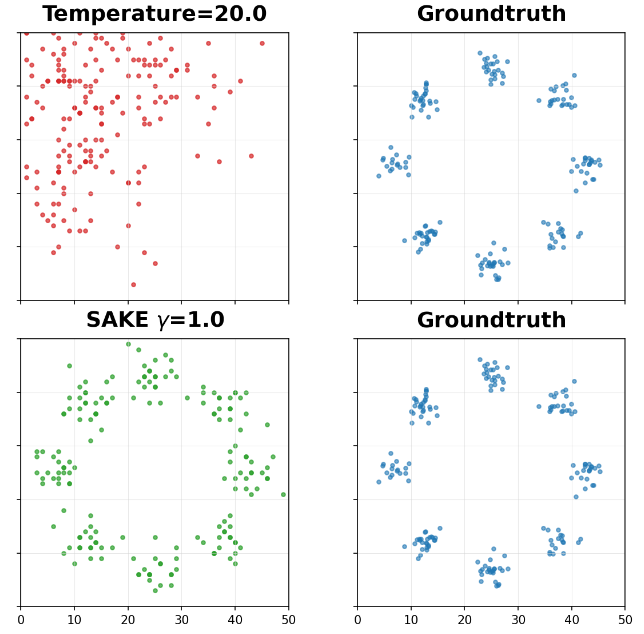
Exploring More to Solve More: Boosting Diversity in Text Diffusion Models via Entropy-Based Guidance
ICML 2026[PAPER]Summary & figure
We propose a training-free Semantic-Aware Kernel Entropy (SAKE) guidance method for diffusion LLMs to enhance the reasoning ability.
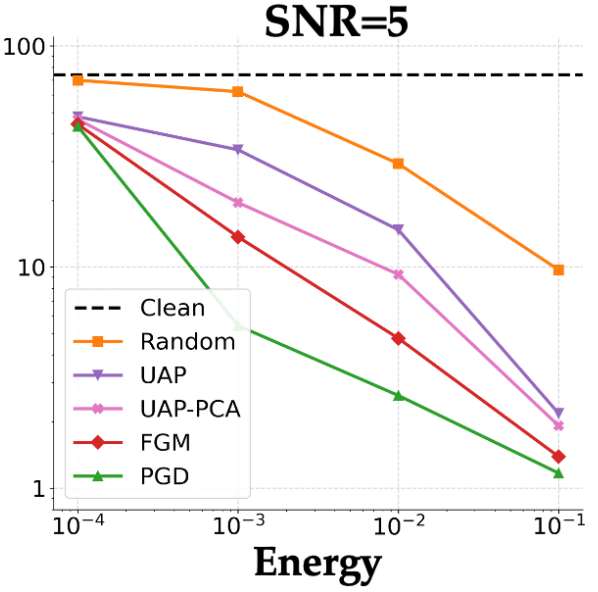
On the Fragility of AI-Based Channel Decoders under Small Channel Perturbations
ISIT 2026[PAPER]Summary & figure
We theoretically and numerically study the lens of robustness to distributional shifts at the channel output.
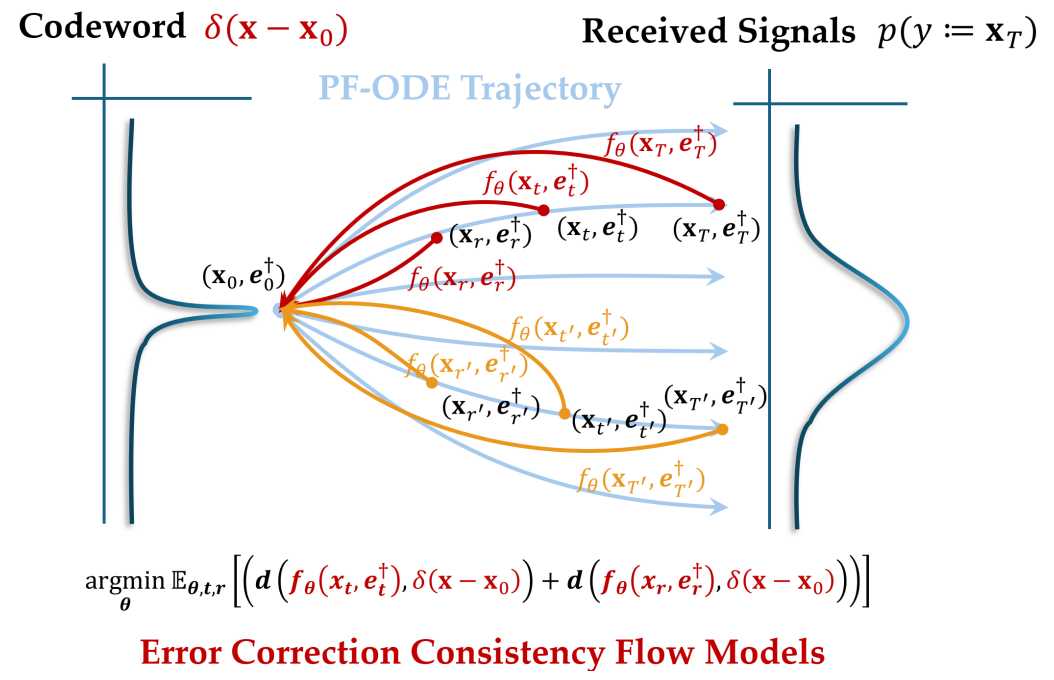
Syndrome-Flow Consistency Model Achieves One-step Denoising Error Correction Codes
AAAI 2026 ML4Wireless (Best Paper Award)[PAPER]Summary & figure
We propose a highly-efficient 1-NFE consistency flow model for decoding tasks in Error Correction Codes with superior performance.
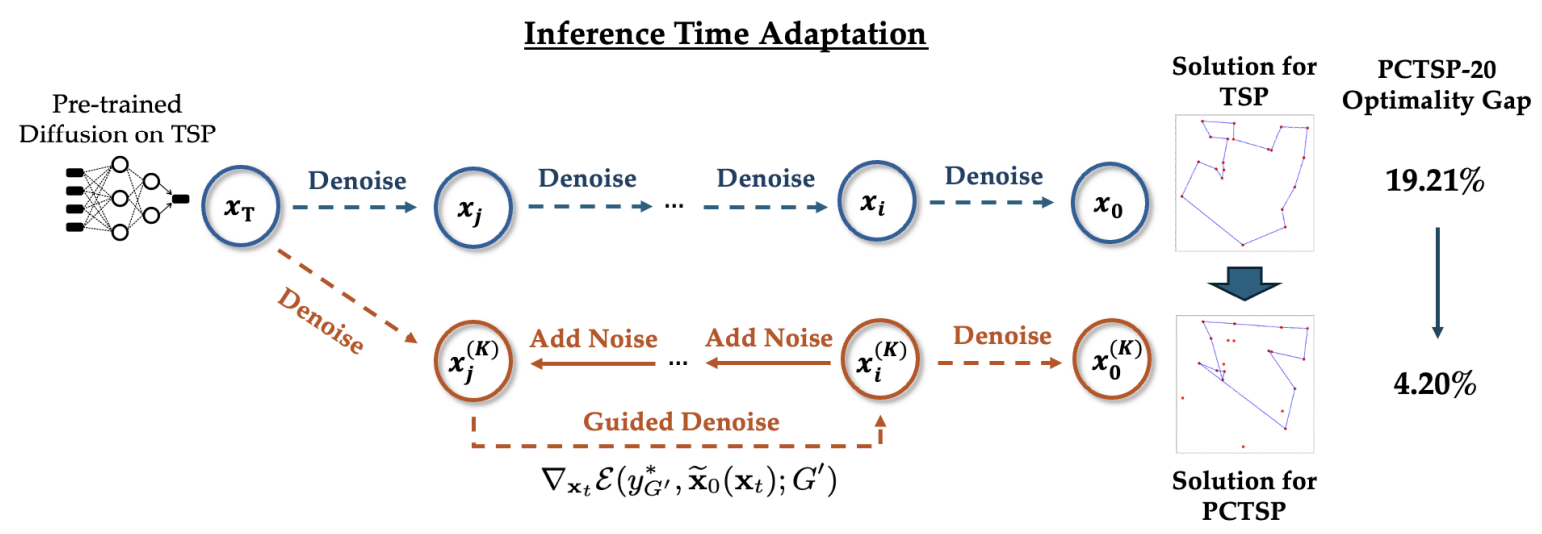
Boosting Generalization in Diffusion-Based Neural Combinatorial Solver via Inference Time Adaptation
AAAI 2026[PAPER]Summary & figure
We propose a general energy-guided sampling framework during inference time that enhances both the cross-scale and cross-problem generalization capabilities of diffusion-based NCO solvers without requiring additional training.
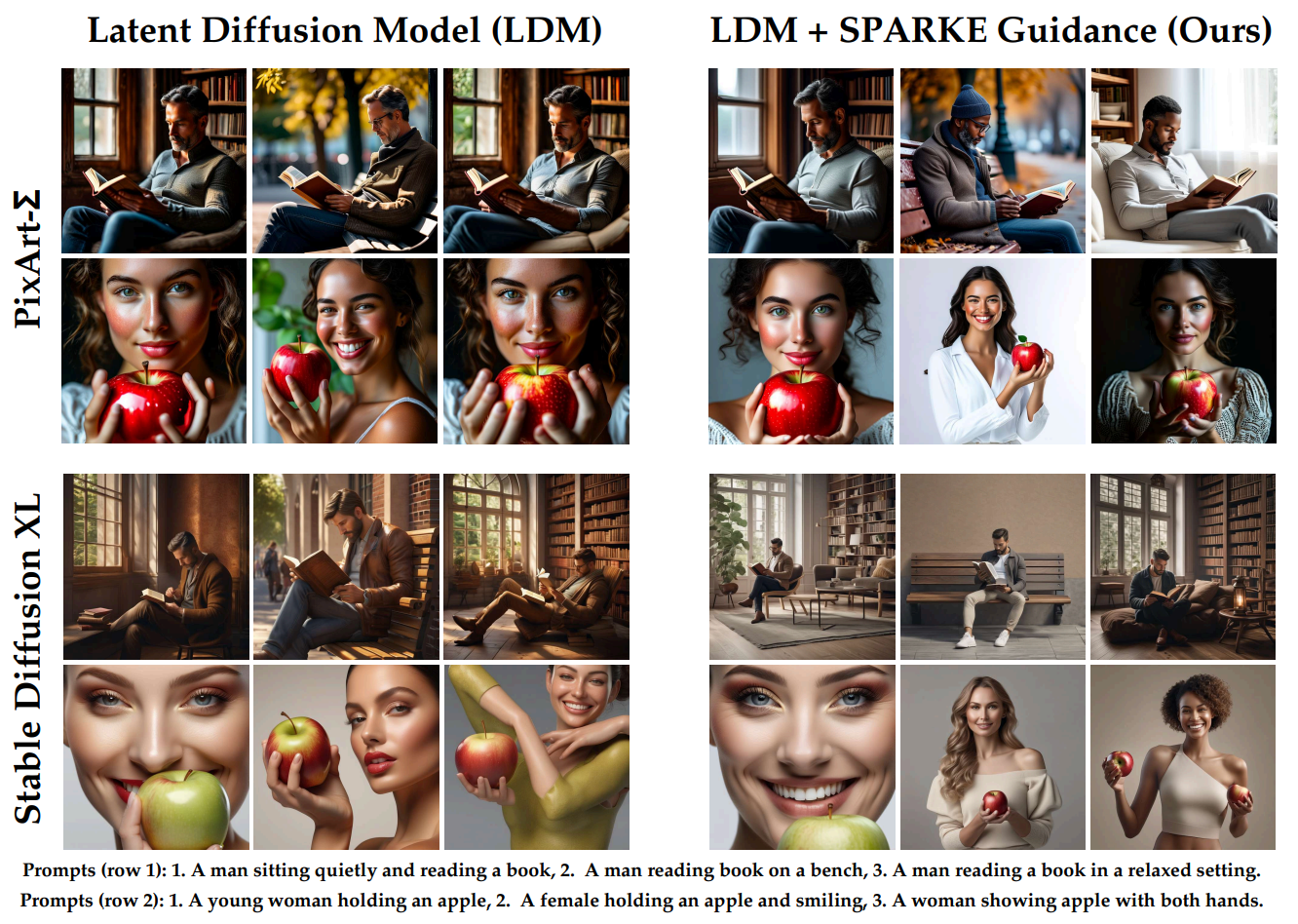
SPARKE: Scalable Prompt-Aware Diversity and Novelty Guidance in Diffusion Models via RKE Scores
NeurIPS 2025Summary & figure
We propose the Scalable Prompt-Aware Renyi Kernel Entropy Diversity Guidance (SPARKE) method to improve prompt-aware diversity in text-to-image diffusion models, allowing large-scale generation settings with linear inference computational overhead.
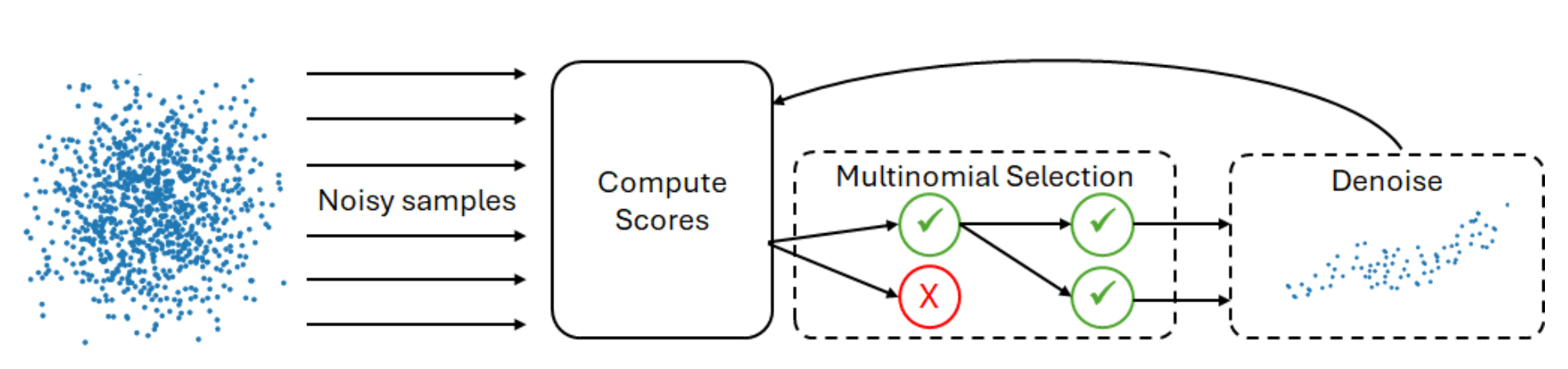
Two-Steps Diffusion Policy for Robotic Manipulation via Genetic Denoising
NeurIPS 2025[PAPER]Summary & figure
We propose an efficient two-step sampling strategy for diffusion policy models for robotic manipulation satisfying physical constraints.
MESH - Understanding Videos Like Human: Measuring Hallucinations in Large Video Models
ACMMM 2025Summary & figure
We introduce MESH, a benchmark designed to evaluate hallucinations in LVMs systematically. MESH uses a Question-Answering framework with binary and multi-choice formats, incorporating target and trap instances.

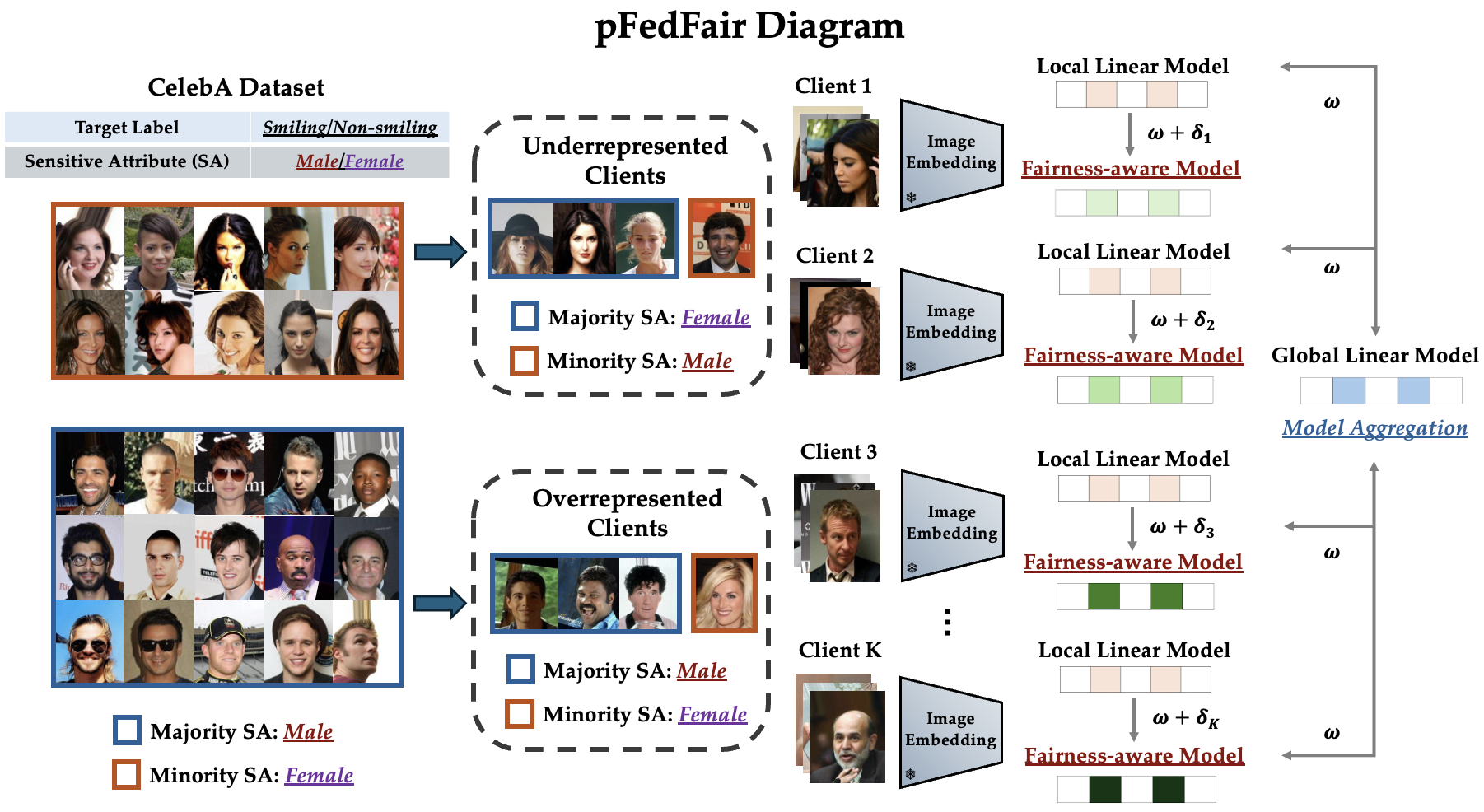
pFedFair: Towards Optimal Group Fairness-Accuracy Trade-off in Heterogeneous Federated Learning
Preprint, 2025[PAPER]Summary & figure
We propose the pFedFair to address personalized federated learning under heterogeneous feature distribution, while applying image embeddings to improve the performance of group-fairness learning methods on computer vision datasets.
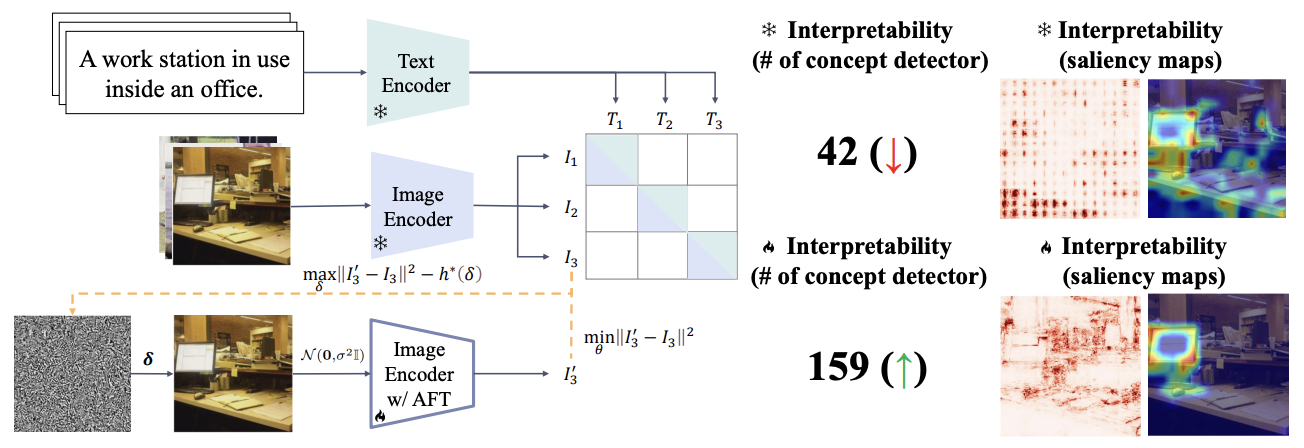
Boosting the visual interpretability of CLIP via adversarial fine-tuning
ICLR 2025Summary & figure
We propose an unsupervised adversarial fine-tuning (AFT) with norm-regularization to enhance the visual interpretability of CLIP.
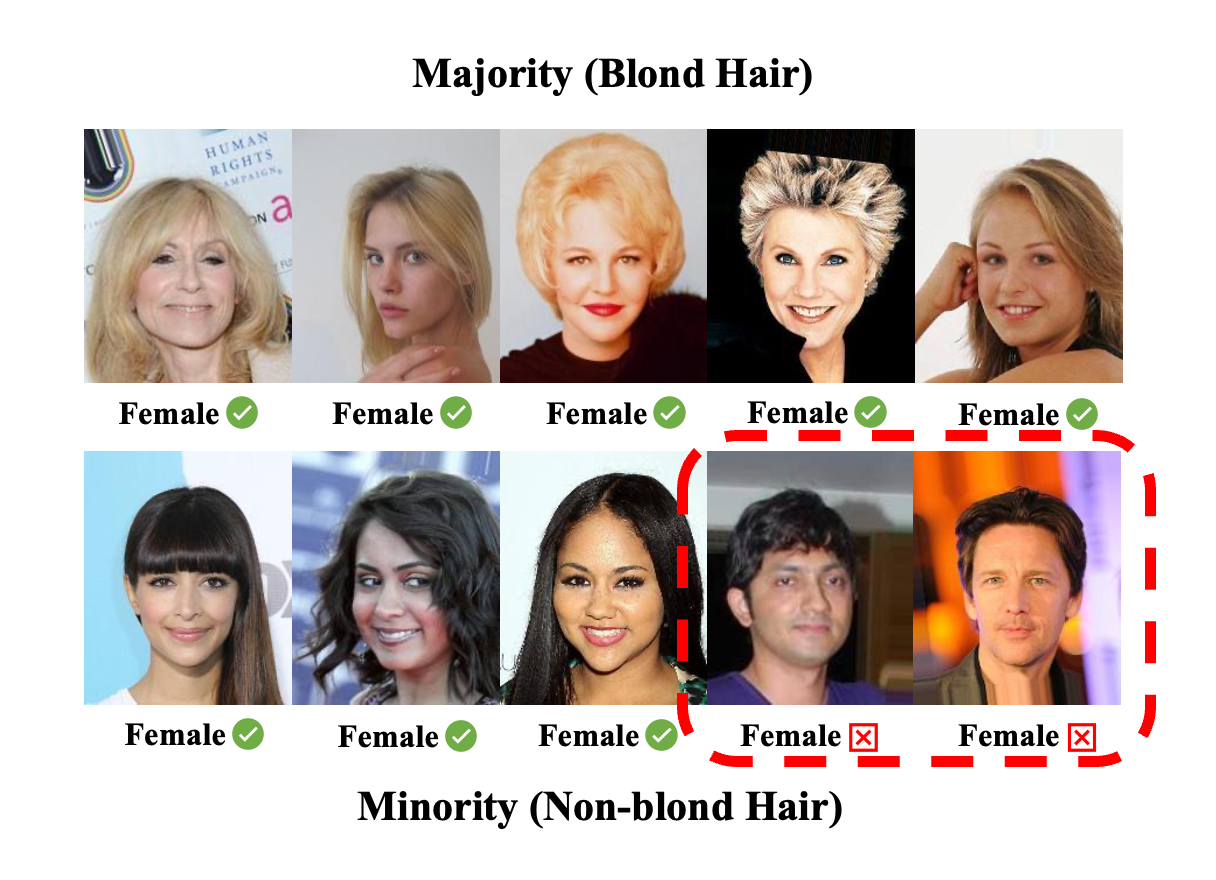
On the Inductive Biases of Demographic Parity-based Fair Learning Algorithms
UAI 2024Summary & figure
We theoretically show that Inductive Biases widely exist in DP-based fair supervised learning algorithms, and further propose a distributionally robust optimization framework to mitigate the biases.
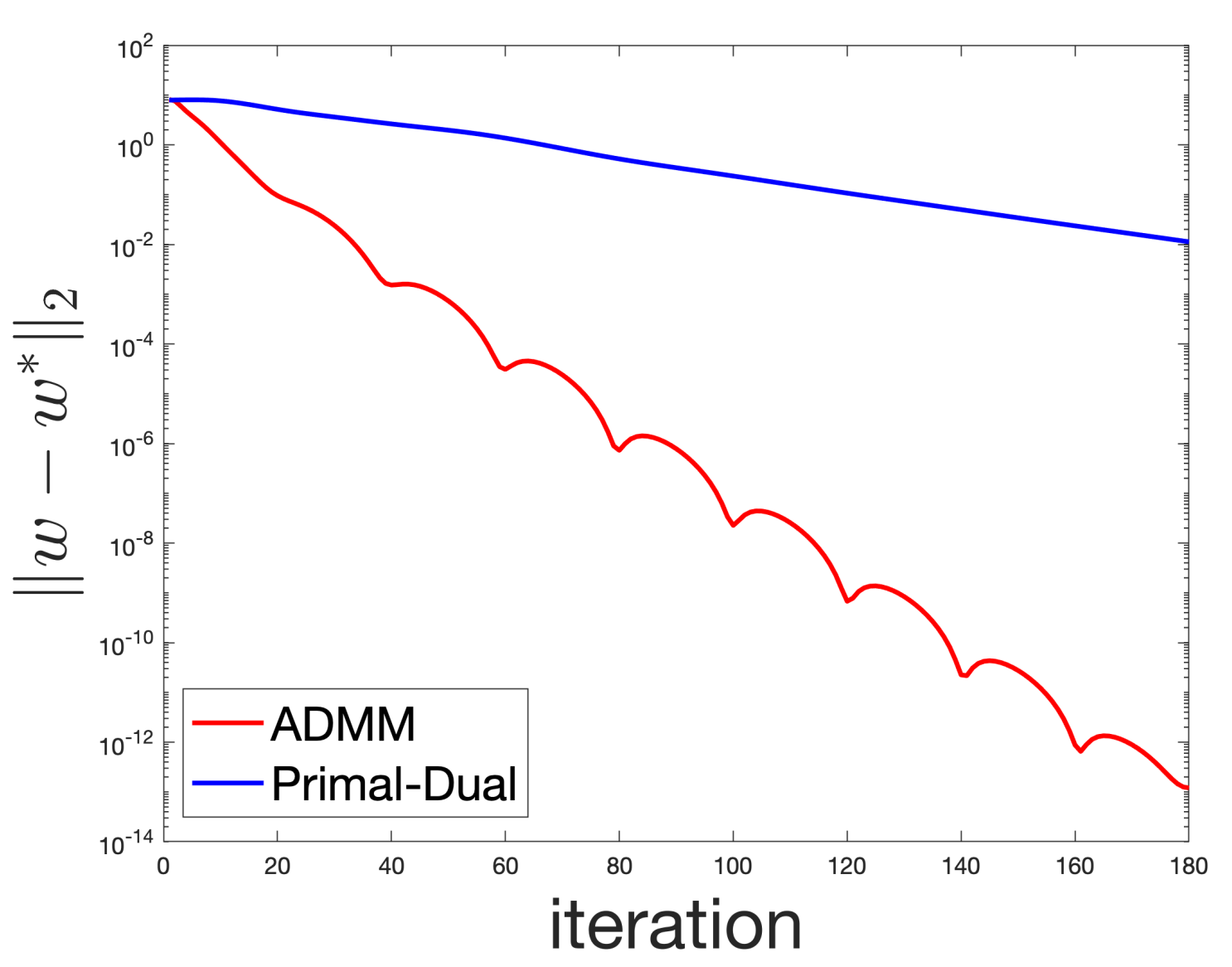
An Efficient Alternating Direction Method For Graph Learning From Smooth Signals
ICASSP 2021[PAPER]Summary & figure
We cast the graph learning formulation as a nonsmooth, strictly convex optimization problem and develop an efficient alternating direction method of multipliers (ADMM) to solve it.
Experience
教育与经历Education
Ph.D. in Computer Science and Engineering Department, CUHK, Hong Kong SAR.
Bachelor of Science in Mathematics and Information Engineering (double major), CUHK, Hong Kong SAR.
Research & Professional Experience
Research intern, Huawei Hong Kong Research Center, Theory Lab, Hong Kong SAR, China
Research intern, Huawei Noah's Ark Lab, Decision Making & Reasoning Group, Shenzhen, China
Research Assistant, advised by Prof. Anthony MC So, Department of SEEM, CUHK, Hong Kong SAR
Research Assistant, advised by Prof. Eliza Mik, Department of Law, CUHK, Hong Kong SAR
Research Assistant, advised by Prof. Anthony MC So, Department of SEEM, CUHK, Hong Kong SAR
Financial Internship, Guotai Junan Securities, Hunan Changsha
Honors & Awards
荣誉奖励Huawei Noah's Ark Lab Outstanding Intern
Postgraduate Studentship Scholarship Scheme
Chung Chi College Departmental Prize (Graduation Top 10%)
Dean's List (Academic Year Top 10%)
Chung Chi College Class Scholarship (College Top 10%)
ELITE Stream Scholarship
Top 0.15% in Hunan Province's Gaokao (University Entrance Exam)
Teaching
教学经历AIST3010/ESTR3114 Numerical Optimization (Undergraduate)
CSCI5130 Game Theory (Postgraduate)
CSCI5030 Machine Learning Theory (Postgraduate)
ENGG2760A Probability for Engineers (Undergraduate)
ENGG1003SG Digital Literacy and Computational Thinking (Undergraduate)
AIST3010 Numerical Optimization (Undergraduate)
Languages & Skills
语言与技能Languages: English (Advanced), Cantonese (Intermediate), Putonghua (Native)
Programming Skills: Python (Main), Pytorch (Main), Matlab, R, C, C++, C#, Julia, LaTeX
Contact
联系方式Hong Kong SAR, China
Feel free to email me about internships or research collaborations.